You may have noticed it's been a while since my last blog posting. Between working the press box at
 |
| To read about how to juggle all your obligations, check | |
|
|
| out this article. |
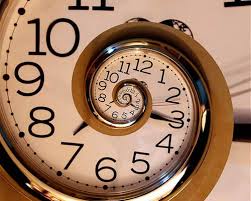
the soccer games one or two nights each week, preparing to wrap up another school year, starting my part-time summer job before summer break even begins, and the normal business of everyday life, I haven't had much time to even consider what subject matter I might want to include in an upcoming blog post, much less write one. In fact, I've felt a little bit like
the girl pictured to the right.
And while I am still busy beyond belief, some subject matter presented itself to me earlier this week in the form of a shared post on
LinkedIn about how to create the perfect blog entry. My initial intent was simply to read
the article and try to implement some of its suggestions. Today, two or three days after happening across
the article, I finally found a few spare minutes to read it, and it occurred to me that I could not only try to apply the information, but that I might also share it with you in the case that perhaps you yourself are considering creating a blog.
Here is what I learned:
Lucky Number Seven
Apparently, there are seven essential elements to any good blog entry. They are...
1. The headline
( I used one of eight tactics mentioned below in my headline.) 2. The anecdotal hook
(I think I achieved this with my first two paragraphs.)3. Shorter lines (at least in the beginning)
(I tried this by including a visual near the top and allowing my text to wrap around it.) 4. Visuals and graphics
(This post already has two.) 5. "Scannable" subheadings
(Like "Lucky Number Seven" for this section.) 6. Short and sweet content
(I might fall short here...No pun intended.) 7. It's all in the timing: knowing when to post
(I'm totally breaking this rule, simply because I am so excited to finally be posting again, and I can't wait until the alleged best time.)
Begin at the Beginning
Let's start with one of the most important elements of any blog post: your headline, or title. According to the article I read regarding this topic, "
The Anatomy of the Perfect Blog Post," by
Kevan Lee, readers remember the first three words of a headline and the last three words of a headline.
Something else to keep in mind: In order for your headline to fit entirely on a search-results page, it should be 55 characters or fewer.
Eight Ways to Write a Headline
- Surprise – “This Is Not a Perfect Blog Post (But It Could’ve Been)”
- Questions – “Do You Know How to Create the Perfect Blog Post?”
- Curiosity gap – “10 Ingredients in a Perfect Blog Post. Number 9 Is Impossible!”
- Negatives – “Never Write a Boring Blog Post Again”
- How to – “How to Create a Perfect Blog Post”
- Numbers – “10 Tips to Creating a Perfect Blog Post”
- Audience referencing – “For People on the Verge of Writing the Perfect Blog Post”
- Specificity – “The 6-Part Process to Getting Twice the Traffic to Your Blog Post"
(I did not create the above samples. They are directly from "
The Anatomy of a Perfect Blog Post.")
The Magical Formula
Lenka Istvanova's findings with regards to the most effective headlines found that headlines that got the most "clicks" generally followed this formula:
Numbers + Adjective + Target Keyword + Rationale + Promise
For example, a headline might read something like:
5 Easy Ways to Boost your Self-Esteem Right Now
Tell me a Story: The Anecdotal Hook
As an English teacher, I am constantly advising my students to begin their papers and essays with an anecdote, so I was pleased to read that
blog posts that begin by telling a story receive 300% more readers (Lee). I try to begin most of my blog posts, like this one, with some sort of personal anecdote, as doing so adds interest.
Shorter Lines (At Least at First)
In this blog post, I tried to follow the advice in the article I keep referencing by placing an image in the upper right corner of the entry and allowing the text to wrap around it. According to Lee, "Placing an image at the top right/left of your blog post forces the
first few lines of the post to shorten in width. This shortening leads
to fewer characters per line. Fewer characters per line has
a psychological effect on the way we view content: The fewer the characters, the easier the text is to comprehend and the less complex it seems."
Subheadings
You may have noticed that each topic of this blog entry is set apart by its own bolded, enlarged title, or subheading. Sectioning your blog post off by topics makes it more readable and more scannable. In other words, it makes your blog more reader-friendly.
Short and Sweet?
For whatever reason, I have always been under the impression that the shorter the blog post, the better. I thought a post that looked too lengthy would turn readers off. Contrary to my intuition of the shorter, the better, it turns out that blog posts of 1,500 words or more typically provoke more shares, and blog posts of 700 words of fewer typically provoke far less shares. (Lee).
It's All in the Timing
 |
| A recent study revealed that post-shares increase early in the morning and late at night. |
In terms of trying to get more views, the best time to publish a blog entry is on Saturday or Sunday. "Only 13 percent of the 1.2 million blog posts in the
Track Maven study were published on the weekends," and blog entries posted over the weekend also received the most shares on other social media sites (Lee). In addition, most shares happen either very early in the morning, or very late at night.
Source
All of the valuable information above came from the source listed below, and is dramatically simplified and shortened. To read the whole article, view charts and graphs, and get even
more information on creating the perfect blog entry,
click here.
Lee, Kevan. "The Anatomy of a Perfect Blog Post: The Data on Headlines, Length, Images, and More."
Bufferapp.com. 28 May 2014. <http://blog.bufferapp.com/perfect-blog-post-research-data>.


